











Things to Do in Hong Kong: A Neighbourhood-by-Neighbourhood Guide
A practical guide to things to do in Hong Kong, from Victoria Peak to Kowloon's markets, plus how to stay online with a Hong Kong eSIM.
By The YuzuSIM travel team · 5 min read
Start with the shape of the city
Hong Kong is small on a map and dense in practice. The MTR rail network links almost everything a first-time visitor wants, and the Octopus card or a contactless bank card covers trains, buses, ferries and most convenience stores. Plan by district rather than by attraction list, and you will spend your time looking at the city instead of crossing it.
A simple rhythm: one Hong Kong Island day, one Kowloon day, one day out on the water or on a trail. That covers the icons without turning the trip into a commute.
Hong Kong Island: Central, Sheung Wan and Victoria Peak
Victoria Peak is the classic first stop, and the Peak Tram from Central is the classic way up. Go early or go late; the queue is the main variable, not the view. The walking loop around the top gives you the skyline from several angles without needing a ticket for every platform.
Back at sea level, Central is a grid of escalators, tailors, temples and coffee. The Central–Mid-Levels Escalator is a free, genuinely useful piece of transport that happens to be a sight in itself. Sheung Wan next door is where the dried-seafood shops, old shophouses and small design studios sit together, and it is a good place to eat without a reservation.
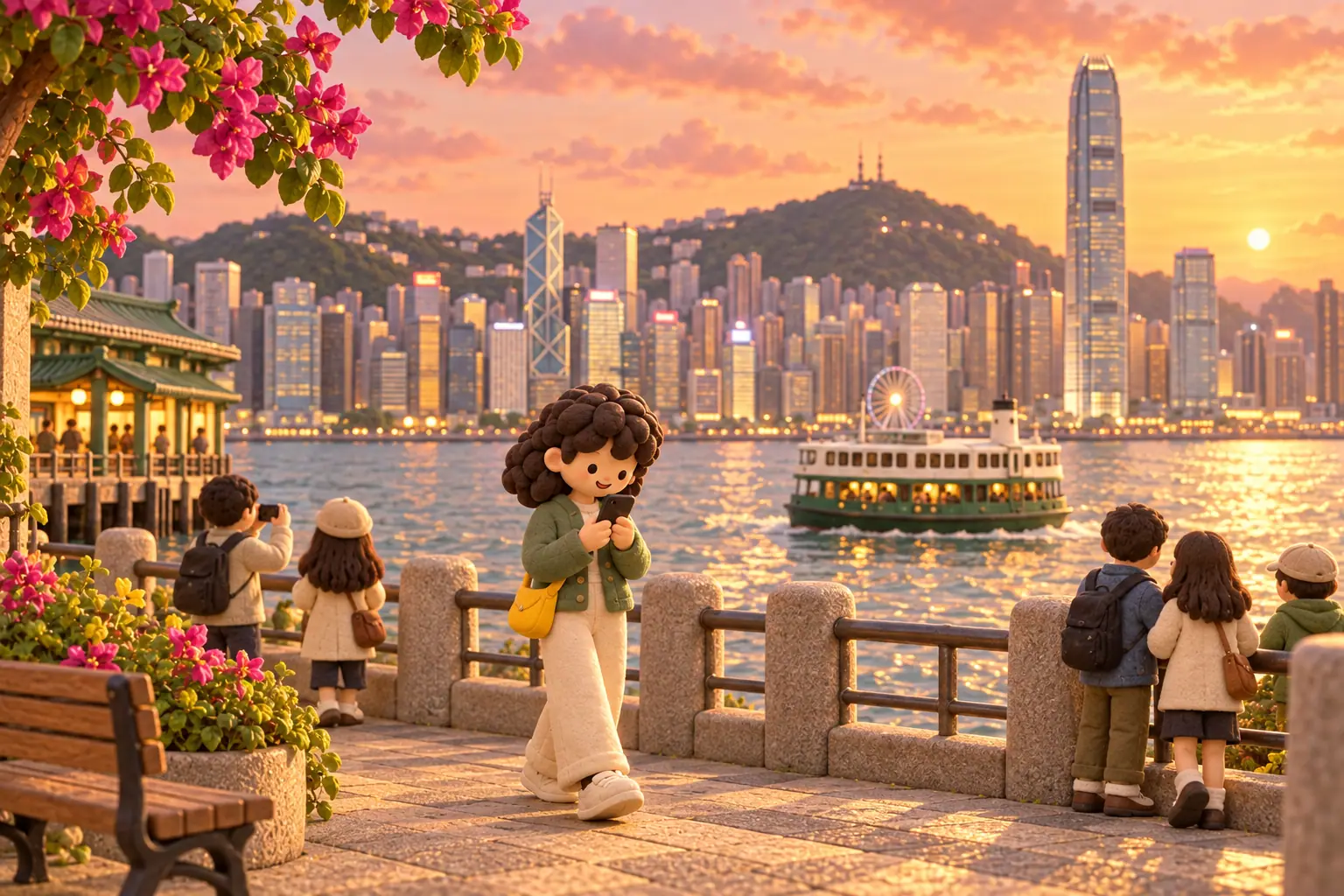
If you want the harbour from the water rather than from a tower, the Star Ferry between Central and Tsim Sha Tsui costs about as little as a sightseeing cruise can and takes roughly ten minutes.
Kowloon: Tsim Sha Tsui, Mong Kok and Sham Shui Po
Tsim Sha Tsui is the Kowloon waterfront: the Hong Kong Museum of Art, the Hong Kong Space Museum, the Avenue of Stars and the Symphony of Lights light show over the harbour. It is also where a lot of hotels sit, which makes it a practical base.
Mong Kok is density as an attraction: the Ladies' Market and Flower Market, the goldfish market, and the Temple Street Night Market after dark. Sham Shui Po has shifted from workwear and electronics to a genuinely good food and coffee neighbourhood, with the Apliu Street electronics stalls still doing what they have always done.
For a first-timer's version of this, our Seoul notebook is a useful comparison for how we structure a city day; the same logic applies here.
Markets, temples and the New Territories
Wong Tai Sin Temple in Kowloon is the most accessible of the big temples and busy in a way that is part of the experience. Chi Lin Nunnery and the Nan Lian Garden next to it are a quieter, wood-and-stone counterpoint and are a short walk from Diamond Hill station.
Beyond the urban core, the New Territories rewards a half-day: Tai Po for the market and waterfront, Sai Kung for seafood and boat trips to the geopark, and Tsuen Wan as a gateway to trails. This is where the city gets green fast, and where a working data connection matters most, because signage and bus routes are less forgiving than on the MTR.
Outlying islands and the water
Lantau holds both the airport and the Big Buddha at Ngong Ping, reachable by cable car or bus. Cheung Chau is a car-free island of bikes and seafood, about an hour by ferry from Central. Lamma is the closest thing to a slow afternoon within reach of the skyline.
Ferries are cheap, frequent and part of the point. Check the operator's timetable the night before; schedules thin out in the evening.
A decision table for a short trip
| If you have | Do this | Skip or save for next time |
|---|---|---|
| One day | Victoria Peak, Star Ferry, Tsim Sha Tsui waterfront, Temple Street at night | Lantau, outlying islands |
| Two days | Add Sheung Wan and Central, plus one market district | Big Buddha cable car on a weekend |
| Three days | Add a Lantau or Cheung Chau day | Second temple visit |
| Four days or more | Add Sai Kung, a trail, and a museum morning | Rushing the New Territories in a half-day |
What to book before you go
Two things are worth sorting before you fly: your transport card and your data. The Octopus card can be bought on arrival, but your internet should not wait until you are standing in arrivals looking for a SIM kiosk.
A Hong Kong eSIM installs before departure and activates when you land, so the airport train, the hotel address in a taxi app and your first map search all work immediately. Our guide to eSIM data for short trips covers how much you actually need for a two- or three-day stay, and if you are combining Hong Kong with the mainland, Shanghai's eSIM guide explains what changes when you cross the border.
If you are not sure your phone supports eSIM at all, check our compatibility checklist before you buy anything.
Getting around without wasting the day
The MTR is the default. Buses and the tram are slower but show you more. Taxis are metered and useful late at night; ride-hailing works too, but pickup points in dense areas can be fiddly. Walking between MTR stations in Central or Tsim Sha Tsui is often faster than the interchange.
Keep a downloaded offline map as a backup, but plan on being online: live transit arrivals, restaurant queues and ferry timetables are all app-first in Hong Kong.
When to go, and what it changes
Spring and autumn are the comfortable windows. Summer is hot and wet, and typhoon season can shut down ferries and outdoor attractions at short notice. Winter is mild and clear, which makes it the best time for the Peak and for harbour walks.
Public holidays and Lunar New Year change opening hours significantly. Check official listings rather than assuming a museum or market is open.
What to buy, and where
The plan that fits most first trips is a Hong Kong data eSIM sized to your stay, installed before you fly and active on landing. Compare the options and buy in the Hong Kong eSIM store — it is the same store the rest of this guide assumes, and it is one click from here.
If you are still deciding between a physical SIM, pocket Wi-Fi and an eSIM, our Korea comparison walks through the trade-offs in a way that applies to Hong Kong too. And if you are building a multi-city trip, one trip, more than one destination covers how to keep one connection across borders.
A simple three-day shape
- Day 1: Peak Tram early, walk the loop, Star Ferry to Tsim Sha Tsui, Avenue of Stars, Symphony of Lights.
- Day 2: Central and Sheung Wan in the morning, Mong Kok markets in the afternoon, Temple Street after dinner.
- Day 3: Pick one — Lantau and the Big Buddha, Cheung Chau by ferry, or Sai Kung and the geopark.
That is enough to see the city properly without spending the trip in transit.
Where are we going?
Choose your destination. Pick your plan. Buy right here.