









A first-timer's Seoul notebook
Palaces, hanok lanes, market lunches and river evenings, plus the T-money basics that make Seoul simple to get around.
By The YuzuSIM travel team · 4 min read
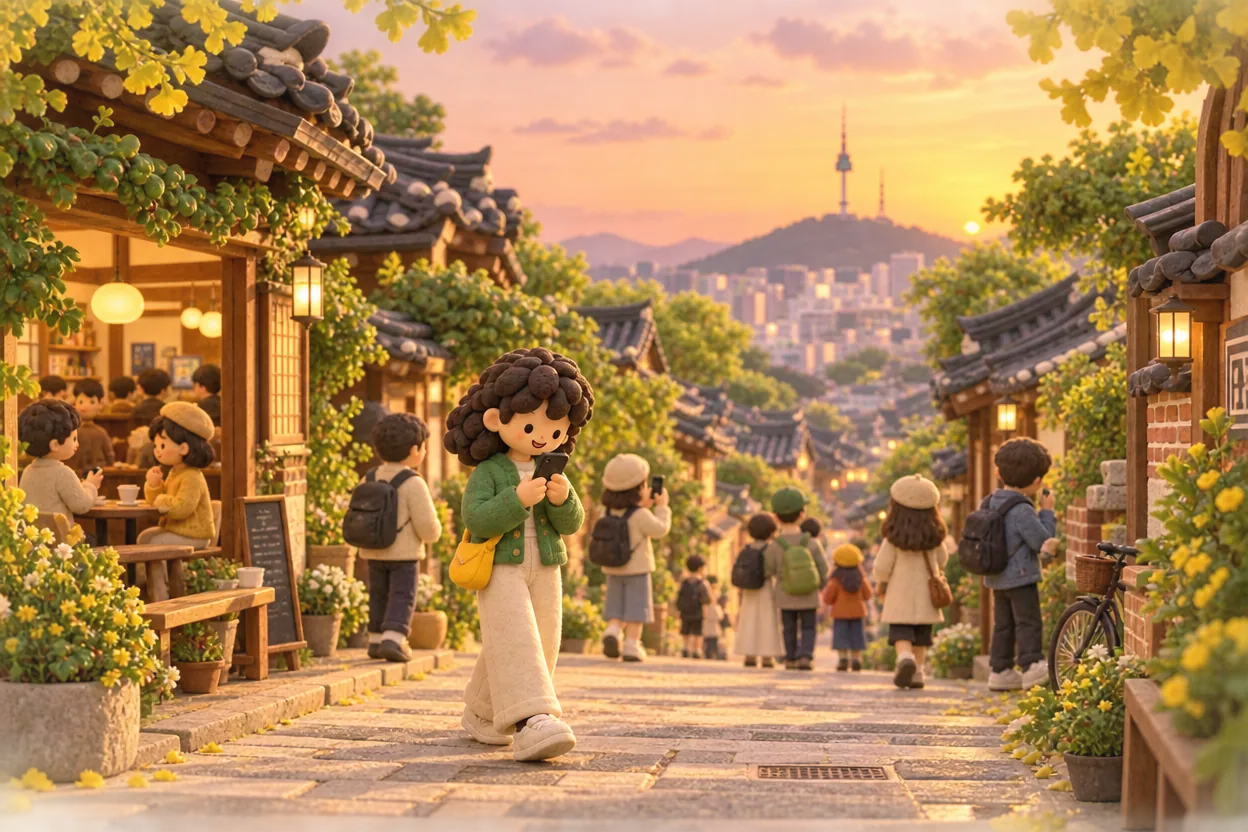
Palaces and hanbok
Gyeongbokgung, built in 1395, was the main palace of the Joseon Dynasty, and it is a natural first stop. Two practical notes:
- It is closed every Tuesday.
- You can enter for free if you wear a complete hanbok, Korea’s traditional dress.
The National Palace Museum of Korea and the National Folk Museum of Korea both stand on the palace grounds, so a rainy morning here still works. Gwanghwamun Station (Line 5, Exit 2) and Gyeongbokgung Station (Line 3, Exit 5) are each about 500 metres away.
Changdeokgung, a UNESCO World Heritage Site, closes on Mondays instead. Its Secret Garden, Huwon, takes up around 60 percent of the palace grounds, with a large pond, Buyongji, and the Buyongjeong Pavilion. Secret Garden viewings can be booked through the Integrated Reservation Service, so plan ahead if it is on your list. Anguk Station (Line 3) is close by.
A tip for pacing: one palace per morning is plenty. They reward slow looking far more than a dash between gates.
Bukchon, quietly
Bukchon Hanok Village sits between Gyeongbokgung and Changdeokgung, and it reflects some 600 years of Seoul’s history. It is a residential village, home to Seoul residents, so it helps to walk through it as you would through any neighbourhood where people live.
Since November 2024, part of Bukchon has been a special management zone. Visitors may enter the restricted areas only between 10:00 and 17:00, so plan your walk for the middle of the day.
The neighbourhood asks for silent tourism:
- keep your voice low, and skip horseplay or filming that disturbs residents;
- do not photograph the inside of people’s homes;
- keep groups small.
Anguk Station (Line 3, Exit 3) is the easy way in. Walk slowly, enjoy the hanok lanes, and then carry on to one of the palaces.
Markets for lunch
Gwangjang Market opened in the early 20th century and is a lively traditional market, with a food alley worth planning lunch around. Look for:
- bindae-tteok, mung bean pancakes;
- mayak gimbap, the so-called addictive gimbap;
- yukhoe, Korean beef tartare;
- tteok-bokki and fish cakes.
On the second floor you will find hanbok shops and vintage clothing. The food alley stays open into the evening, and the market is about 60 metres from Exit 8 of Jongno 5-ga Station on Line 1.
Namdaemun Market goes back to the reign of King Taejong in the Joseon era, when shops were built around the Namdaemun gate and rented out. It sells almost everything, from clothing and food to everyday goods, and it has a food alley of its own with stalls lined up on both sides. It closes on Sundays and hours vary from stall to stall. Hoehyeon Station on Line 4 is right beside it, at Exit 7.
Evenings by the Han River
For an easy evening, head to the river. In Banpo Hangang Park, the Moonlight Rainbow Fountain on Banpo Bridge sends out water from 380 jets with coloured lights that move in time to music.
A few details to plan around:
- The fountain runs from April to October each year.
- There is a show at midday and several each evening, and each lasts about 20 minutes.
- The walk from Express Bus Terminal Station (Lines 3, 7 and 9, Exit 8-1) is just over a kilometre.
Bring a layer for the breeze, and check the show times on the day in case they change.
Getting around with T-money
A T-money card is the simple way to pay for the subway, buses and taxis.
- Where to buy it: convenience stores such as GS25, CU and 7-Eleven, and information centres in Seoul subway stations on Lines 1 to 8.
- Where to top it up: the ticket machines inside subway stations.
- Where to use it: public transport, including the subway, city buses, taxis and trains, plus shops that show the T-money logo.
Tap your card when you get off the bus as well as when you get on. Seoul’s transfer discount between buses and the subway applies when your next ride starts within 30 minutes of getting off the last one, or within an hour between 9 p.m. and 7 a.m., and it only works with a transportation card.
For directions, Naver Map is widely used in Korea and works in English; VisitKorea recommends it for finding routes. If you need help in English, the Korea Travel Helpline offers tourist information and interpretation. Call 1330 inside Korea, or +82-2-1330 from overseas.
One last thing before you fly: check your eSIM plan’s activation rule, since some plans start counting their days the moment you install them.
A little data for the detours.
Compare South Korea plans and choose the one that fits your trip.
Shop South Korea eSIMs