

















A slower day in Kyoto
A calm route through Kyoto's shrines, gardens and markets, with the local manners that help residents and visitors share the city.
By The YuzuSIM travel team · 4 min read
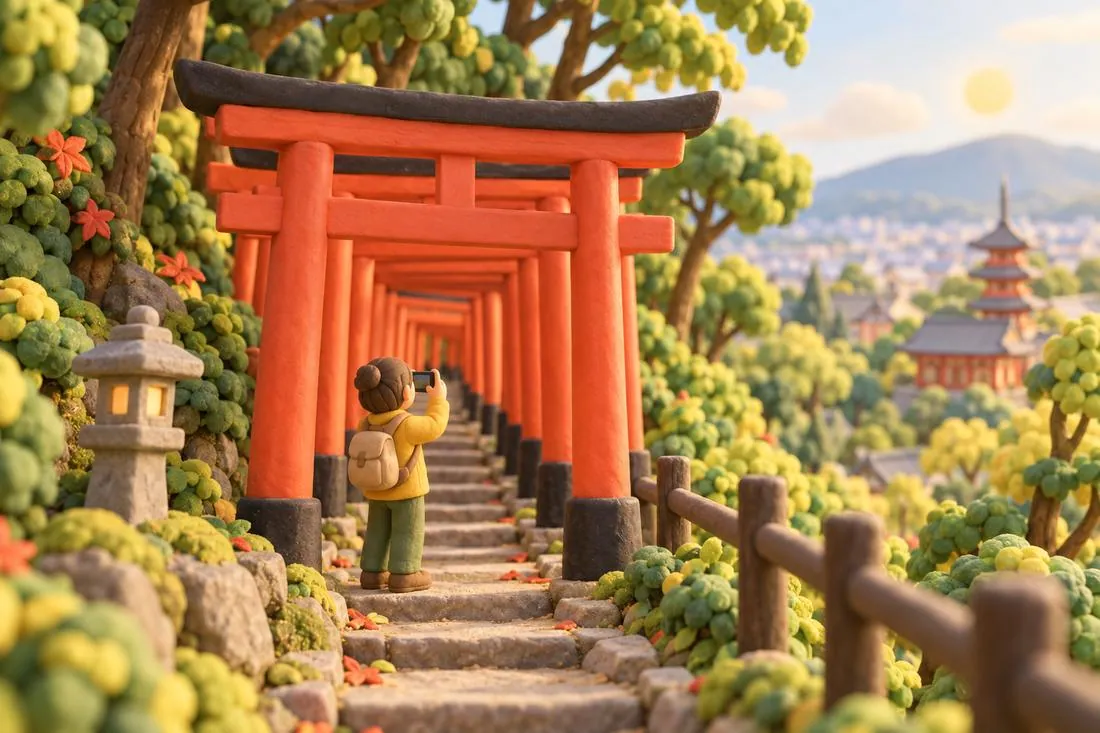
Start early at Fushimi Inari
Fushimi Inari Taisha is the shrine of the orange gates. More than 5,000 torii wind up the slopes of Inariyama, a sacred mountain 233 metres high, and the whole mountain counts as part of the shrine’s grounds.
You do not need to climb to the top. Walk until the paths feel quiet, then turn back, or keep going if the upper shrines tempt you: Kyoto’s official guide calls the walk around them a pleasant day hike. An early start is worth it if you can manage one, and it leaves the rest of the day free.
Getting there is simple. JR Inari Station, two stops and about five minutes from Kyoto Station on the JR Nara Line, sits right next to the shrine. Keihan Fushimi-Inari Station is about five minutes’ walk away.
The shrine asks every visitor to:
- eat only in the marked rest areas, not while walking;
- keep the narrow paths clear rather than stopping to take photos or film on them;
- leave drones at home, and keep voices down for the people who come to pray.
The Philosopher’s Path and a temple garden
The Philosopher’s Path follows a canal at the foot of Kyoto’s eastern hills, between Ginkaku-ji, the Silver Pavilion, and Nyakuoji Bridge. It takes its name from the philosopher Nishida Kitaro, one of several well-known figures who walked here to think, and it passes close to the temples of Honen-in and Anraku-ji. In spring, cherry blossom arches over the path. Kyoto’s official guide suggests the Eikan-do-mae or Ginkaku-ji city bus stops to reach it.
In the same part of the city, Nanzen-ji makes a natural pause. It is the head temple of the Rinzai sect of Zen Buddhism, and it has two gardens worth sitting with:
- a dry landscape rock garden at the main hall;
- a moss and rock garden at the sub-temple Nanzen-in.
Part of the Lake Biwa aqueduct, dating from 1890, also stands in the temple grounds. The gardens are especially beautiful when the autumn leaves turn.
If a garden made only of stone and gravel appeals, save Ryoan-ji for another day. Its famous dry garden sets fifteen rocks in raked white gravel, arranged so that you can never see all fifteen from any one spot. Beyond it, a larger garden of trees and moss surrounds the Kyoyo-chi pond.
Lunch at Nishiki Market
Nishiki Market, often called Kyoto’s Kitchen, began as an open-air fish market some 400 years ago. Today it is a passage about 400 metres long and under 4 metres wide, with over 100 vendors selling pickles, tofu and yuba, Japanese sweets, tea, sake, rice crackers, cookware and ceramics.
Business starts later in the morning, and JNTO suggests arriving as close to 11 a.m. as you can, before it gets very crowded.
The local request here is simple. When you buy something to eat, enjoy it at the shop where you bought it, and leave your rubbish there too. It keeps the narrow passage moving and the market clean.
Evenings by the Kamo river, and manners in Gion
As the day cools, walk down to the Kamo river. Its banks are where people in Kyoto come to relax, and the scenery changes with the seasons and the time of day. Take care after heavy rain, as the water can rise to high levels.
In summer, dining on noryo-yuka terraces overlooking the river is a Kyoto tradition. In Pontocho, an area of narrow, lantern-lit streets, you can book dinner on one.
Gion, meanwhile, is a neighbourhood where people live and work, and it asks visitors for care:
- Stay on public roads and in shops. The southern Gion district asks visitors not to enter temples, shrines or private property without permission, and points out that trespassing, littering and obstructing traffic can lead to fines.
- Let geiko and maiko pass. Do not stop, touch, follow or photograph them without permission. If you would like to see them perform, go to a public performance instead.
- Watch for signs. Photography is not allowed in many parts of Gion, in parts of shrines and temples, and in some restaurants.
- Take your rubbish with you, and keep your voice low in residential streets.
Getting around gently
Kyoto’s official guide points to trains and the subway for moving between districts. City buses are handy for shorter trips but can get crowded, so a few manners go a long way:
- queue at the stop or on the platform;
- keep conversations and phone calls quiet;
- offer priority seats to older people, disabled passengers and anyone with a baby;
- do not eat or drink on board.
Large suitcases are the other thing to leave behind. Kyoto asks visitors to use luggage delivery between Kyoto Station and their accommodation, or to store bags in lockers, because big cases on public transport take up space local residents need. Travelling hands-free also makes a slow day slower in the nicest way.
One practical note for your phone: check your eSIM plan’s activation rule before you travel, and keep your order link to hand in case you need your setup steps again.
A little data for the detours.
Compare Japan plans and choose the one that fits your trip.
Shop Japan eSIMs